
AI plays a key role in paid advertising services on platforms like Google Ads and Meta Ads.
AI algorithms can:
Artificial intelligence is increasingly becoming part of everyday life and marketing processes. From finding recipes to researching brands and companies, AI systems gather all the necessary information in seconds and provide users with accurate, relevant answers.
From forecasting and analytics to personalized content, automated advertising, and customer service, AI handles a wide range of marketing tasks. Marketers who know how to leverage AI gain a competitive edge and succeed on digital platforms.
In this blog, marketing agency Sparsis explores how AI is transforming marketing and how businesses can make the most of it.
In marketing, AI uses machine learning, natural language processing (NLP), and predictive analytics to analyze data, automate decisions, and optimize marketing processes. Unlike traditional automation, AI systems learn from data, becoming more accurate over time and making decisions based on user behavior. This allows marketers to respond to audience actions in real time, implement personalization, and focus on strategy and creativity rather than repetitive tasks.
Today’s digital marketing landscape is complex and multichannel. Consumers interact with brands across multiple platforms, generate vast amounts of data, and expect highly personalized experiences. AI helps marketers manage these processes and use data to optimize campaigns and strategies.
Data-Driven Analytics
AI can analyze millions of data points in seconds, uncovering trends and patterns that would be impossible to spot manually. This allows marketers to make data-driven decisions based on user behavior and current trends.
Speed and Efficiency
Tasks that once took days—audience segmentation, offer optimization, content testing—can now be done automatically and much faster. AI reduces manual work and accelerates operations without sacrificing accuracy.
Competitive Advantage
Brands using AI can launch campaigns faster, personalize user experiences more effectively, and allocate budgets more efficiently. Over time, AI reduces advertising costs and improves overall marketing performance.
AI is now used across almost every aspect of digital marketing. The main applications include:
Personalization
Personalization is no longer just about adding a customer’s name to an email. AI enables real-time personalization based on user behavior, preferences, location, device, and intent. Websites can dynamically adjust content and offers for each visitor. Email campaigns can automatically tailor messages and timing. The result is higher engagement, better conversion rates, and a more relevant experience for users.
Predictive Analytics
AI helps marketers predict future outcomes, not just analyze past performance. Predictive models allow businesses to:
Combined with a well-planned human strategy, AI accelerates campaign learning and reduces conversion costs.
AI can:
While AI does not replace human creativity, it can significantly enhance the quality and effectiveness of content when used properly.
Chatbots and Customer Interaction
AI chatbots provide 24/7 support on websites, messaging apps, and social media. Modern chatbots can:
This improves the user experience while reducing customer support costs.
Search engines increasingly rely on AI, moving from simple keyword matching to understanding user intent. AI helps search engines grasp the topic and intent behind queries, delivering relevant information directly on results pages, often without users needing to click through.
AI-powered SEO focuses on:
AI will continue evolving from a supporting tool into a strategic partner. Key trends include:
Businesses new to AI often don’t know where to begin. The most effective approach is to enhance the marketing team with AI:
AI continues to reshape marketing, but results depend on correct implementation. Contact us to boost your website SEO, advertising performance, content quality, or overall digital marketing using artificial intelligence.
Promoting a business in the market without marketing research is sometimes like searching for the necessary item in a dark room without a light source. You may already know some information about the...
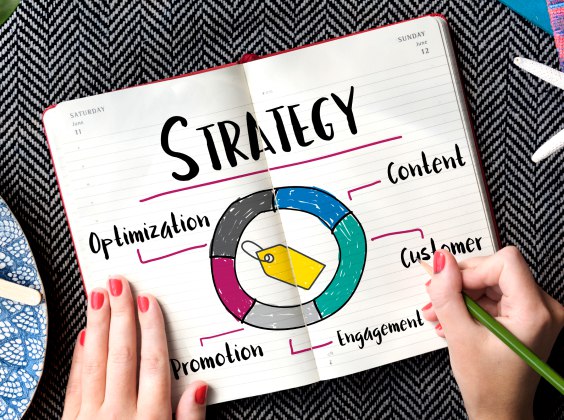
Marketing is an essential aspect of any business. A marketing strategy is a comprehensive plan that outlines how a business will attract, engage, and convert potential customers, it defines business o...

Marketing is a form of human activity aimed at satisfying needs and desires through exchange. This is one of the classic definitions of marketing, introduced by a representative of the American school...